
Use Your Voice: Land invasion of Maasai territory in Loliondo

What we do
N1M is a defenders network that connects at-risk activists with support. Building from the frontline we create conferences, safety and psycho-social support, legal action, and emergency responses that care for the whole person. N1M works in the UK, Cambodia, Guinea-Bissau and Brazil.
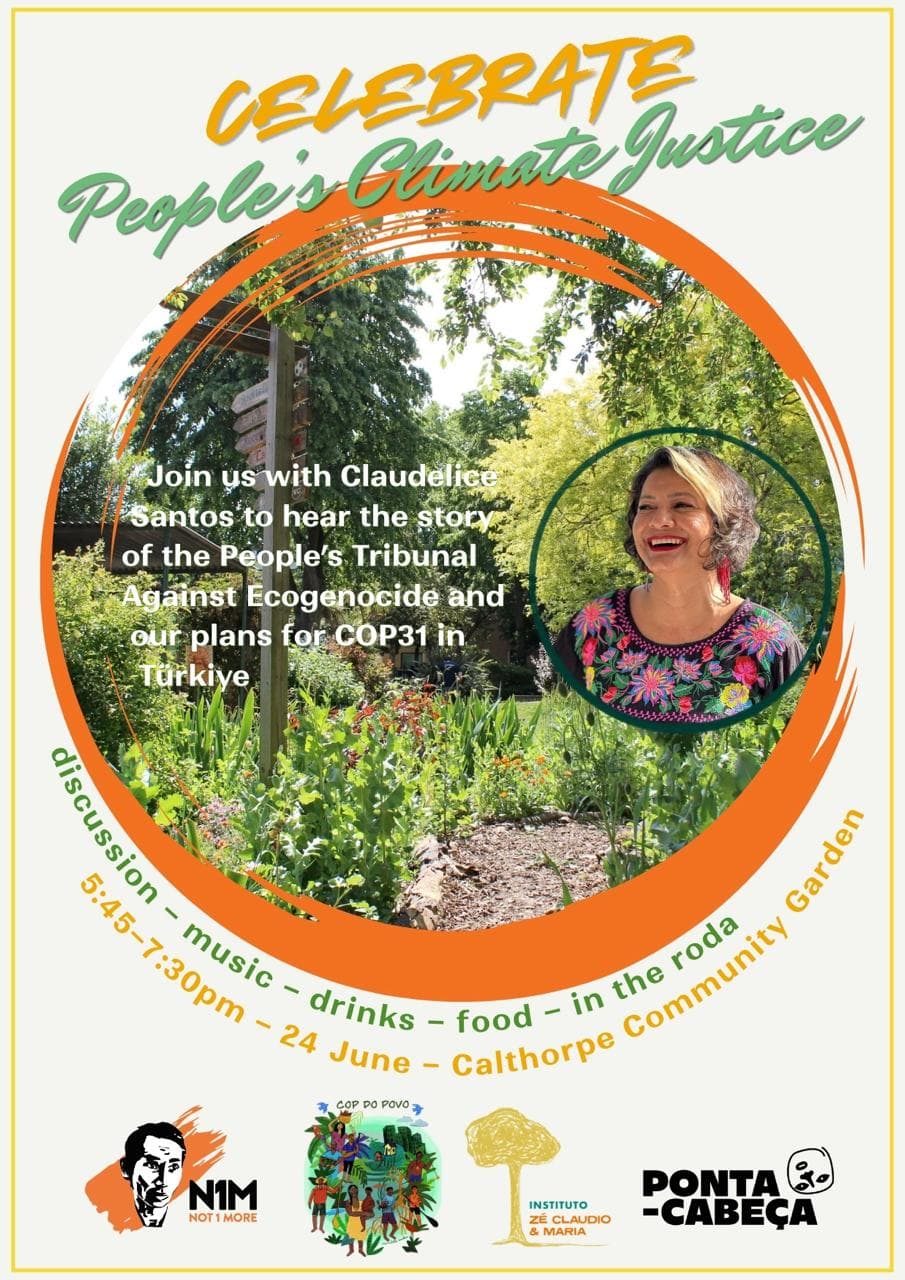
Event: People's Climate Justice: The People's Tribunal Against Ecogenocide from Belém to Antalya
CANCELLED DUE TO EXTREME WEATHER. An intimate and joyful event to share the ongoing work of the People's Tribunal Against Ecogenocide and the People's COP in Belém; as well as looking forward to COP31.
 Find out more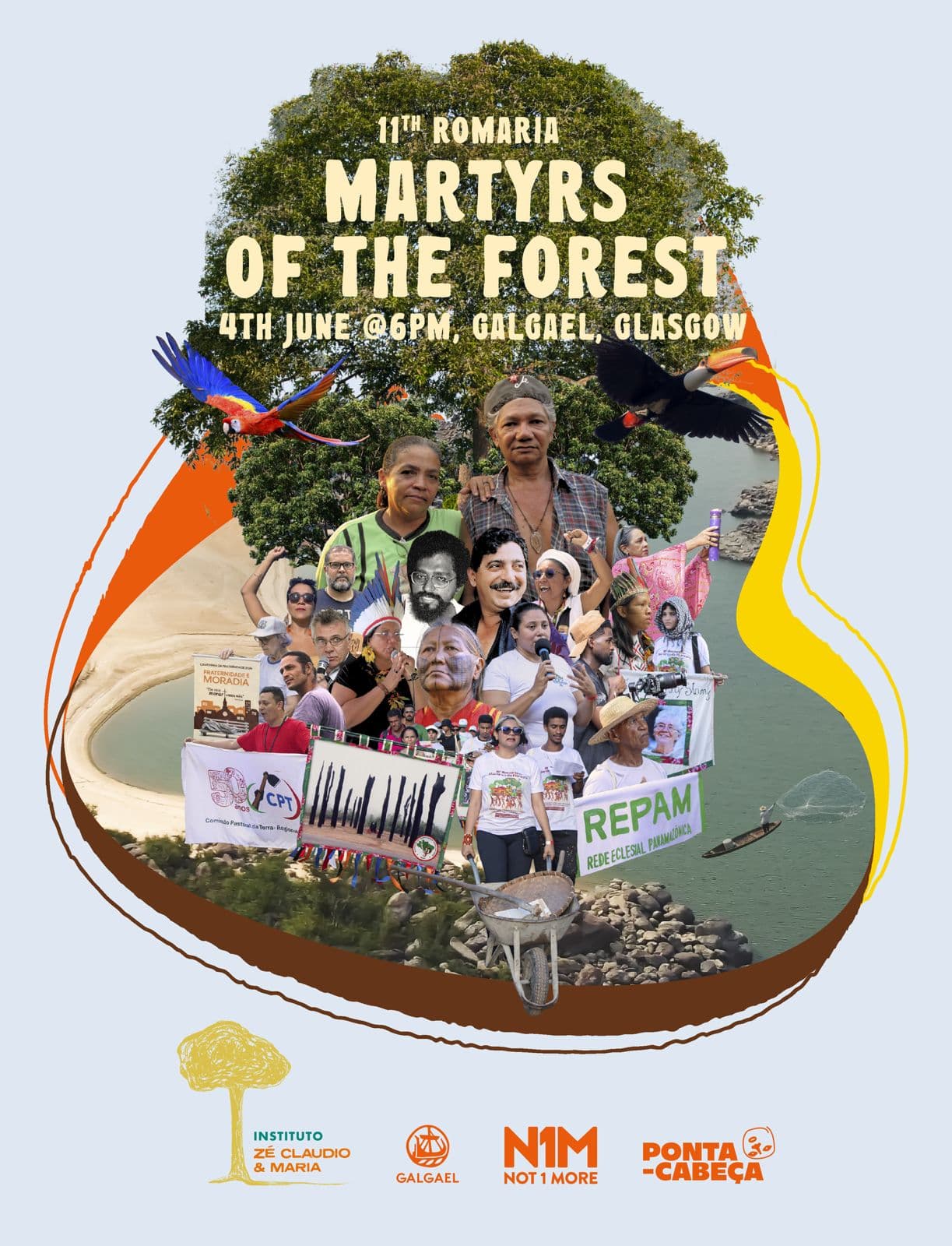
Event: 11th Romaria: Martyrs of the Forest
Join Brazilian environmental defender Claudelice Santos to mark the 11th Romaria of the Martyrs of the Forest, an event that celebrates those that have given their lives protecting Brazil's forests.
Find out moreEurope imports Amazonian commodities linked to violence
Policy briefing: Europe imports Amazonian commodities linked to violence
Mary Menton and Claudelice Santos
2022
European countries import beef, palm oil, minerals and other commodities from Brazil through companies that purchase from farms and mines with proven links to human rights violations and environmental crimes including massacres, assassination attempts, slave labour, illegal deforestation, and pollution. Through analysis of case studies in the South/Southeast of Pará, known as the epicentre of violence against environmental human rights defenders, we found evidence of numerous crimes by companies and farms within the supply chain of European markets. For example, chain-of-custody documents show that large beef export companies purchased cattle raised on the farm where 10 landless workers were massacred in Pau D’Arco in 2017 and where Fernando dos Santos Araújo, witness to the massacre, was murdered in January 2021. These violence footprints of EU markets should be tackled through mandatory human rights and environmental due diligence and insistence upon transparent and traceable supply chains. Given the links between EU markets and these rights violations, the EU must hold companies accountable for these atrocities and increase support to the EU human rights defenders mechanism to protect frontline defenders who speak out against these violations.
Read the full article here
2022
European countries import beef, palm oil, minerals and other commodities from Brazil through companies that purchase from farms and mines with proven links to human rights violations and environmental crimes including massacres, assassination attempts, slave labour, illegal deforestation, and pollution. Through analysis of case studies in the South/Southeast of Pará, known as the epicentre of violence against environmental human rights defenders, we found evidence of numerous crimes by companies and farms within the supply chain of European markets. For example, chain-of-custody documents show that large beef export companies purchased cattle raised on the farm where 10 landless workers were massacred in Pau D’Arco in 2017 and where Fernando dos Santos Araújo, witness to the massacre, was murdered in January 2021. These violence footprints of EU markets should be tackled through mandatory human rights and environmental due diligence and insistence upon transparent and traceable supply chains. Given the links between EU markets and these rights violations, the EU must hold companies accountable for these atrocities and increase support to the EU human rights defenders mechanism to protect frontline defenders who speak out against these violations.
Read the full article here
Find out moreBINGO complicity, necropolitical ecology and environmental defenders
Article: BINGO complicity, necropolitical ecology and environmental defenders
Title: BINGO Complicity, Necropolitical Ecology & Environmental Defenders
Affiliations: Mary Menton, Research Fellow in Environmental Justice, Sussex Sustainability Research Programme, University of Sussex; Paul Gilbert, Senior Lecturer in International Development, School of Global Studies, University of Sussex
Abstract: Several big international non-governmental organisations (BINGOs) have been instrumental in increasing the attention brought to the lived experiences of environmental and land defenders and the atmospheres of violence they face. Among the many BINGOs who frame themselves as ‘supporters’ or ‘protectors’ of environmental and land defenders, several have been complicit in violence perpetrated by park guards and resource extraction companies. In this paper, we unpack the multifaceted nature of the role BINGOs play in shaping the atmospheres of violence with which environmental defenders contend. While BINGOs have acted as whistle-blowers and advocates providing legal assistance to at-risk defenders, they have also been complicit in ‘green violence’ perpetrated in the name of conservation, and more subtle relationships of ‘partnership’ with industries and specific corporations engaged in neo- colonial forms of extraction and violence against defenders. BINGO complicity with the violence against defenders replays the historical entanglement of some organizations with displacement and violence enacted in the name of colonial era conservation. We argue that BINGOs can, and must, work towards more radical forms of decolonial solidarity with environmental and land defenders who contend with atmospheres of violence shaped, in many cases, by conservation efforts and resource extraction activities with which BINGOs may be complicit, either directly, or through various forms of ‘partnership.’ Keywords: BINGOs, environmental defenders, necropolitical ecology, partnership Read the full article here.
Affiliations: Mary Menton, Research Fellow in Environmental Justice, Sussex Sustainability Research Programme, University of Sussex; Paul Gilbert, Senior Lecturer in International Development, School of Global Studies, University of Sussex
Abstract: Several big international non-governmental organisations (BINGOs) have been instrumental in increasing the attention brought to the lived experiences of environmental and land defenders and the atmospheres of violence they face. Among the many BINGOs who frame themselves as ‘supporters’ or ‘protectors’ of environmental and land defenders, several have been complicit in violence perpetrated by park guards and resource extraction companies. In this paper, we unpack the multifaceted nature of the role BINGOs play in shaping the atmospheres of violence with which environmental defenders contend. While BINGOs have acted as whistle-blowers and advocates providing legal assistance to at-risk defenders, they have also been complicit in ‘green violence’ perpetrated in the name of conservation, and more subtle relationships of ‘partnership’ with industries and specific corporations engaged in neo- colonial forms of extraction and violence against defenders. BINGO complicity with the violence against defenders replays the historical entanglement of some organizations with displacement and violence enacted in the name of colonial era conservation. We argue that BINGOs can, and must, work towards more radical forms of decolonial solidarity with environmental and land defenders who contend with atmospheres of violence shaped, in many cases, by conservation efforts and resource extraction activities with which BINGOs may be complicit, either directly, or through various forms of ‘partnership.’ Keywords: BINGOs, environmental defenders, necropolitical ecology, partnership Read the full article here.
Find out more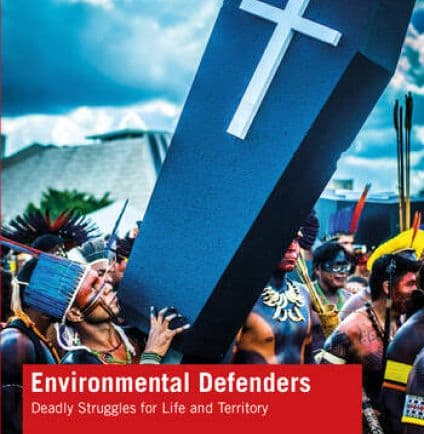
Book: Environmental Defenders: Deadly Struggles for Life and Territory
eds. Mary Menton and Philippe Le Billon
2021
This book is about environmental defenders and the violence they face while seeking to protect their land and the environment.
Between 2002 and 2019, at least two thousand people were killed in 57 countries for defending their lands and the environment. Recent policy initiatives and media coverage have provided much needed attention to the protection and support of defenders, but there has so far been little scholarly work. This edited volume explains who these defenders are, what threats they face, and what can be done to help support and protect them. Delving deep into the complex relations between and within communities, corporations, and government authorities, the book highlights the diversity of defenders, the collective character of their struggles, the many drivers and forms of violence they are facing, as well as the importance of emotions and gendered dimensions in protests and repression. Drawing on global case studies, it examines the violence taking place around different types of development projects, including fossil fuels, agro-industrial, renewable energy, and infrastructure. The volume also examines the violence surrounding conservation projects, including through militarized wildlife protection and surveillance technologies. The book concludes with a reflection on the perspectives of defenders about the best ways to support and protect them. It contrasts these with the lagging efforts of an international community often promoting economic growth over the lives of defenders.
Book available via Routledge.
2021
This book is about environmental defenders and the violence they face while seeking to protect their land and the environment.
Between 2002 and 2019, at least two thousand people were killed in 57 countries for defending their lands and the environment. Recent policy initiatives and media coverage have provided much needed attention to the protection and support of defenders, but there has so far been little scholarly work. This edited volume explains who these defenders are, what threats they face, and what can be done to help support and protect them. Delving deep into the complex relations between and within communities, corporations, and government authorities, the book highlights the diversity of defenders, the collective character of their struggles, the many drivers and forms of violence they are facing, as well as the importance of emotions and gendered dimensions in protests and repression. Drawing on global case studies, it examines the violence taking place around different types of development projects, including fossil fuels, agro-industrial, renewable energy, and infrastructure. The volume also examines the violence surrounding conservation projects, including through militarized wildlife protection and surveillance technologies. The book concludes with a reflection on the perspectives of defenders about the best ways to support and protect them. It contrasts these with the lagging efforts of an international community often promoting economic growth over the lives of defenders.
Book available via Routledge.
Find out more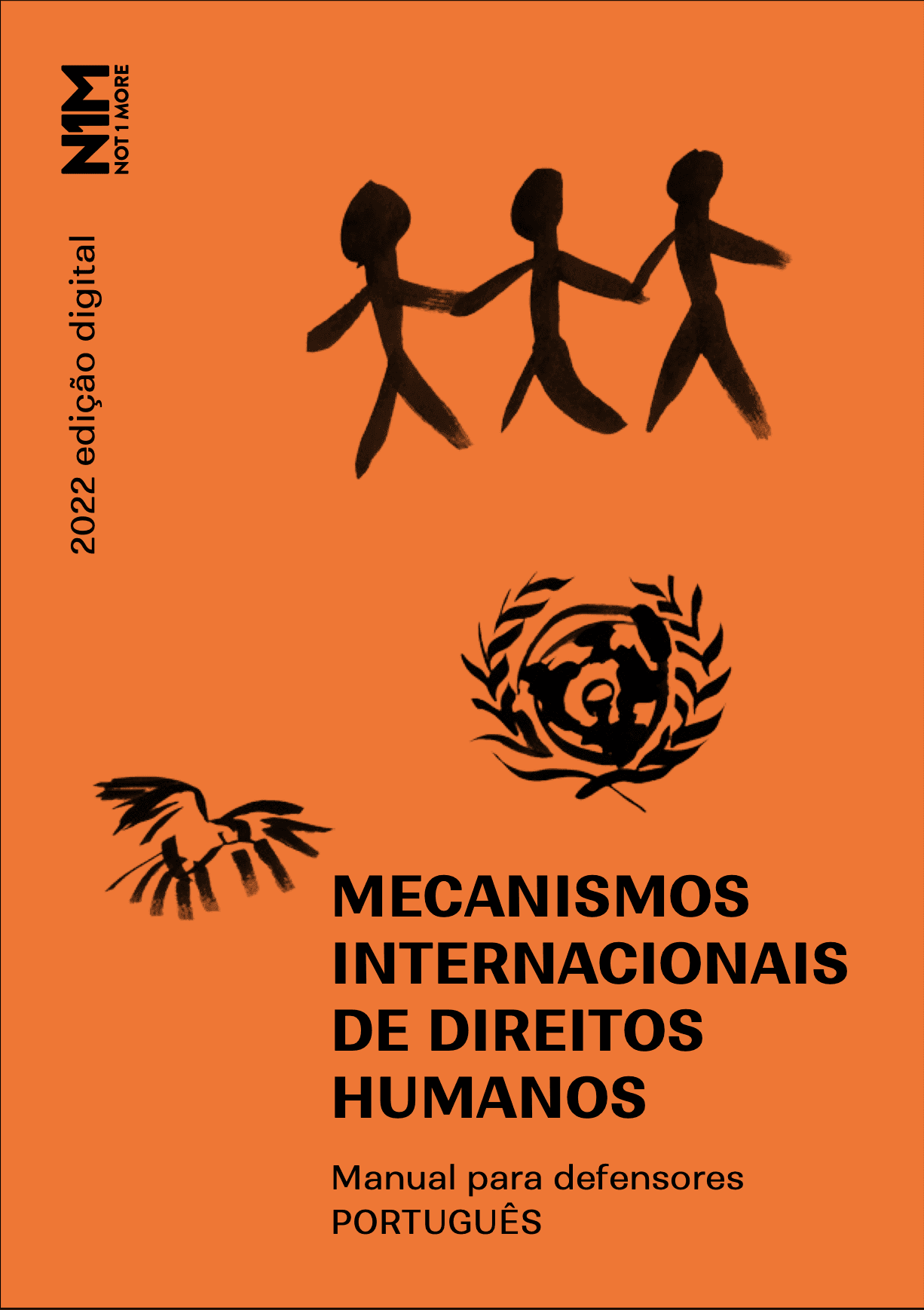
Book: International Human Rights Mechanisms: Defenders Handbook
This booklet is an overview of various international mechanisms for protecting human rights. Many of these processes can be used by people who don’t have any legal training. Individuals and communities seeking resolutions or justice for human rights issues can use this resource to understand the options available and how to apply them.
Find out more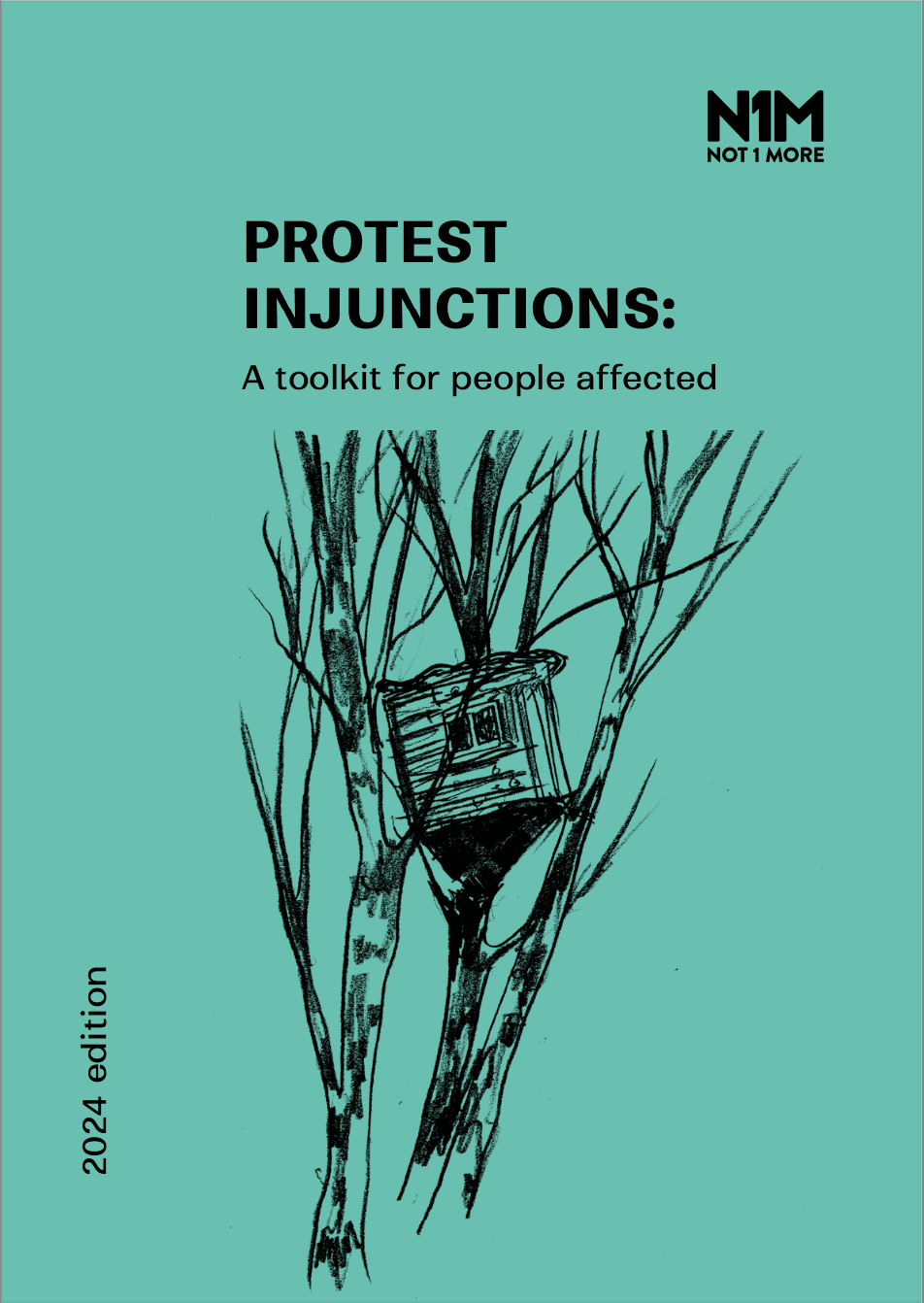
Book: Protest Injunctions Toolkit
Not1More has developed a toolkit for protestors, campaigners and local people who may be affected by Injunctions. Individuals and communities can use this resource to better understand the risks they face when protesting whilst there is an injunction in place.
Find out more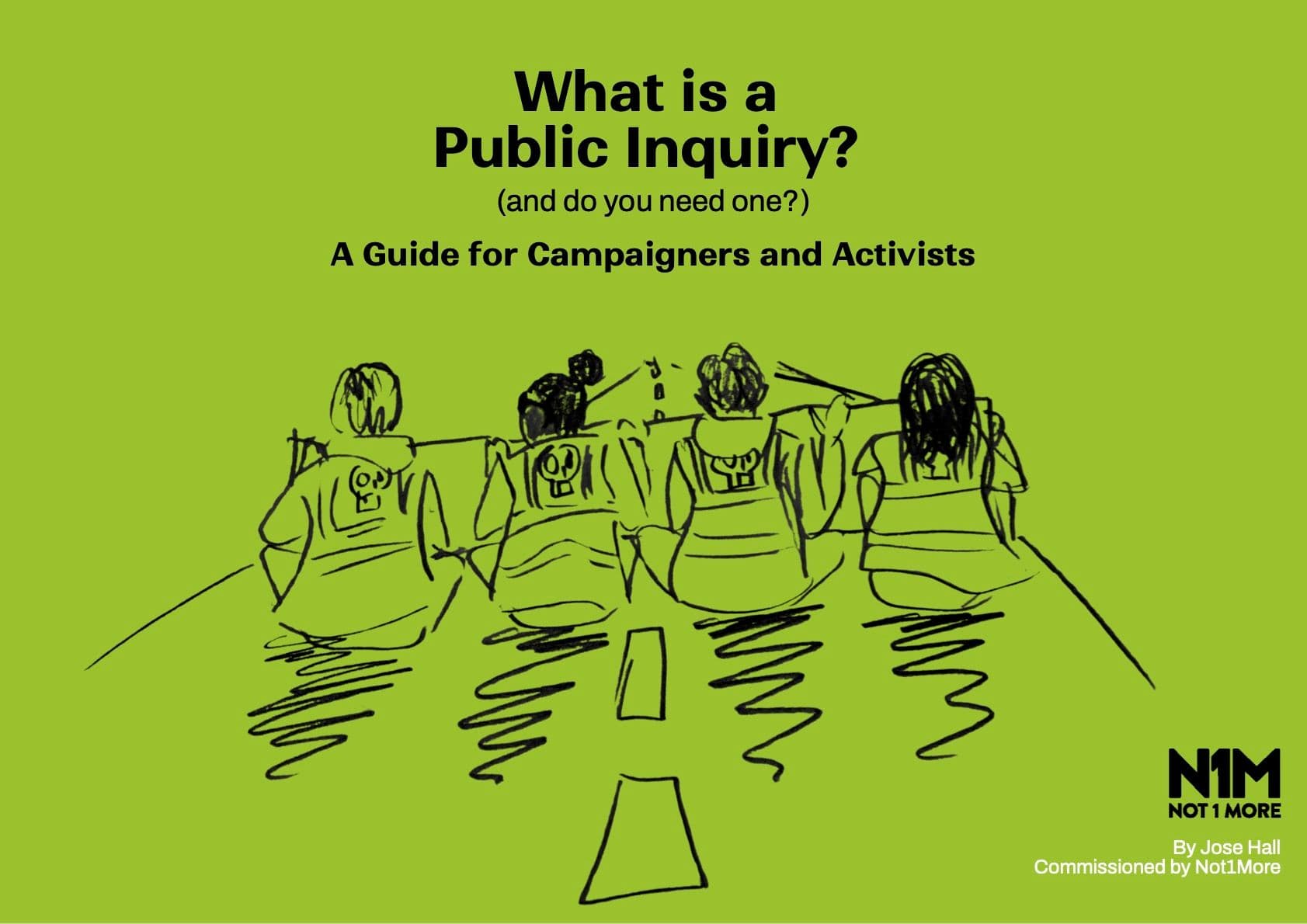
Book: What is a Public Inquiry? A Guide for Campaigners
Not1More has developed a zine with anti-racism writer Jose Hall to help communities decide if they want to pursue a Public Inquiry.
Find out more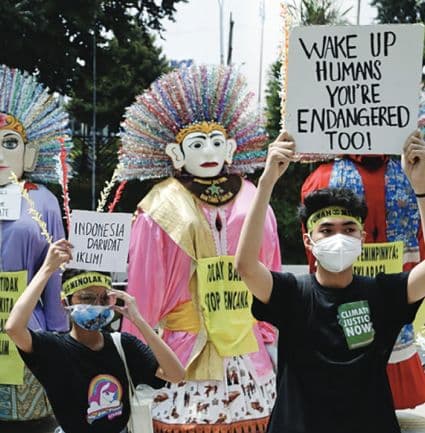
Report: COVID19 and Impacts on Environmental Human Rights
UNEP and UNOHCHR 2022
This report examines the positive and negative impacts of the decrees, laws and other government policies on environmental rights that were either enacted in response to COVID-19 or passed during the pandemic. This rapid assessment covers the implications of these new rules and laws for Southeast Asian countries’ environmental protection measures and for EHRDs. The eleven Southeast Asian countries included in this assessment are Brunei, Cambodia, Indonesia, Lao PDR, Malaysia, Myanmar, the Philippines, Singapore, Thailand, Timor-Leste, and Viet Nam.
Read the full report here.
This report examines the positive and negative impacts of the decrees, laws and other government policies on environmental rights that were either enacted in response to COVID-19 or passed during the pandemic. This rapid assessment covers the implications of these new rules and laws for Southeast Asian countries’ environmental protection measures and for EHRDs. The eleven Southeast Asian countries included in this assessment are Brunei, Cambodia, Indonesia, Lao PDR, Malaysia, Myanmar, the Philippines, Singapore, Thailand, Timor-Leste, and Viet Nam.
Read the full report here.
Find out moreThank you
We would like to thank the many incredible people across the world fighting to protect human rights and the environment. Our gratitude goes in particular to our partner organisations – Instituto Zé Claudio e Maria, Cambodian Youth Network and Our Resources – and our volunteers and funders, for their invaluable work and support.